India’s First Privately Developed Rocket Reaches Orbit on Dramatic Debut Launch

India has achieved a significant milestone in its burgeoning private space sector with the successful orbital debut of Skyroot Aerospace’s Vikram-1 rocket. The fully commercial satellite launcher lifted off from the Satish Dhawan Space Centre on Sriharikota Island, marking a pivotal moment for the nation’s ambition to become a global space powerhouse. The launch, which occurred Saturday at 1:35 am EDT (06:35 UTC), was initially met with a brief delay to address a last-minute technical issue, but ultimately proceeded flawlessly, propelling the rocket into a 280-mile-high orbit.
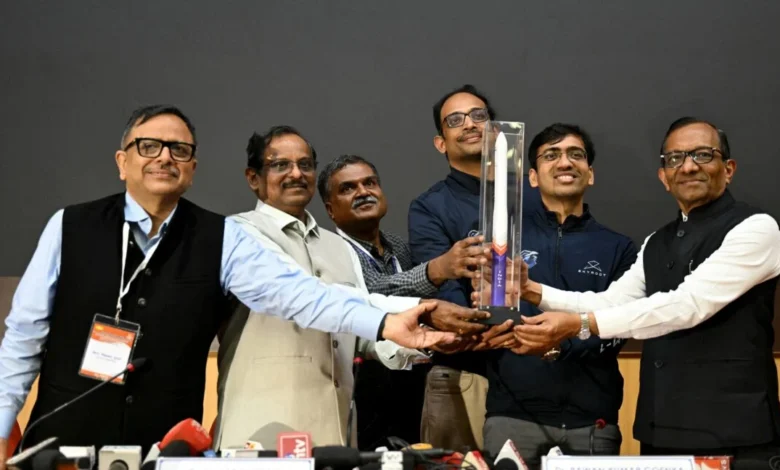
The successful ascent into orbit represents a monumental achievement for Skyroot Aerospace, a company founded with the vision of democratizing access to space. V. Narayanan, chairman of the Indian Space Research Organization (ISRO), and Pawan Kumar Chandana, CEO of Skyroot Aerospace, were among the senior Indian space officials present to witness the historic liftoff, posing with a replica of the Vikram-1 rocket. The image of these leaders, alongside the powerful symbol of India’s indigenous space capabilities, underscores the collaborative spirit driving the nation’s space endeavors.
A Triumph Against the Odds: The Vikram-1’s Maiden Voyage
The Vikram-1, a testament to Indian engineering and innovation, stands approximately 72 feet (22 meters) tall and is designed to deliver payloads of up to 770 pounds (350 kilograms) into low-Earth orbit. While modest in size compared to larger launch vehicles, its capability makes it a competitive option for the growing small satellite market, positioned as a contemporary to established players like Rocket Lab’s Electron.
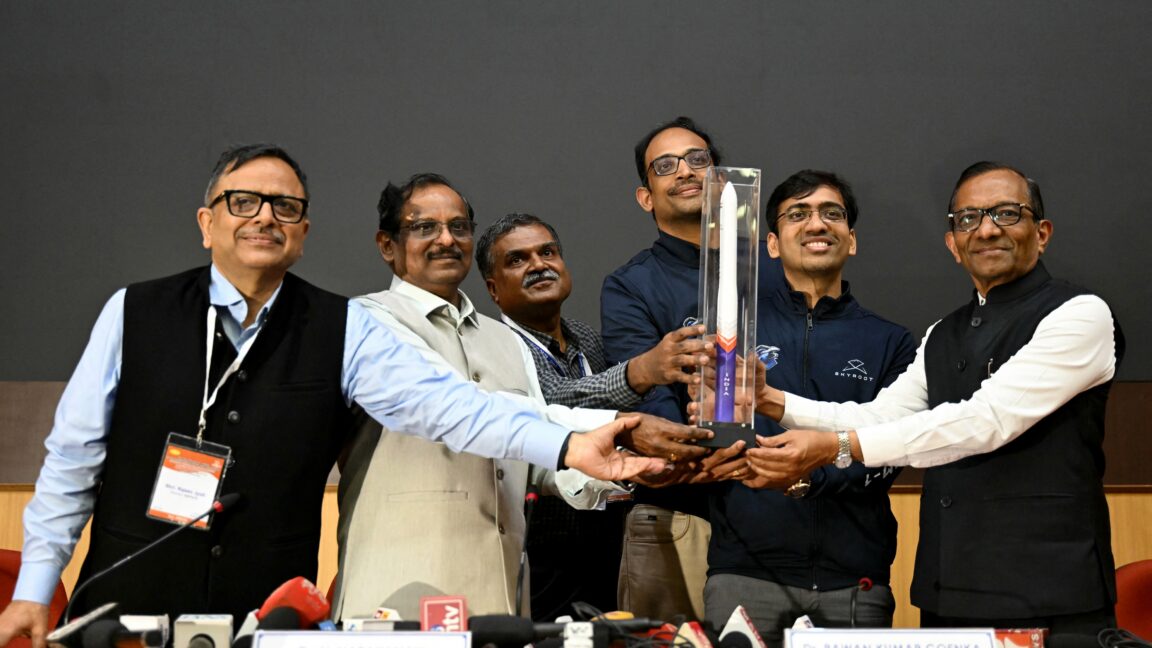
The launch sequence unfolded with precision. Three solid-fueled rocket motors fired in succession, generating the immense thrust required to escape Earth’s gravitational pull. As the rocket ascended, live camera feeds provided a captivating view of each stage of the mission. The critical ignition of the solid-fueled first stage booster marked the beginning of the journey, followed by the sequential firing of subsequent stages. Finally, a small liquid-fueled fourth stage ignited, accelerating the payload to orbital velocity, reaching speeds of approximately 17,000 mph.
While the overall flight was remarkably smooth, a minor anomaly was observed during the separation of the rocket’s third and fourth stages. The spent third-stage motor appeared to remain in closer proximity to the fourth stage than anticipated during a brief coasting period, rather than receding to a greater distance. Despite this observation, the fourth stage performed its duty impeccably. Its 3D-printed engine fired successfully, achieving an orbit of approximately 280 miles (450 kilometers) at an inclination of 60 degrees to the equator. This orbital insertion was remarkably close to the pre-flight predictions, a fact confirmed by independent US military tracking data.
Beating the Odds: A Private Sector Breakthrough
The success of Vikram-1 on its inaugural flight is particularly noteworthy when considering the historical track record of new private orbital-class rockets. Many established companies faced setbacks on their first attempts. SpaceX, for instance, required four attempts to achieve orbit with its Falcon 1 rocket in 2008. Similarly, Rocket Lab’s Electron rocket did not reach orbit on its initial launch in 2017. Blue Origin’s heavy-lift New Glenn rocket, while ultimately successful in its 2025 debut, benefited from years of experience with its smaller, suborbital New Shepard rocket.
Pawan Kumar Chandana, Skyroot’s cofounder and CEO, expressed profound emotion following the successful mission. "We achieved one of the biggest milestones ever in India’s space sector—the first private orbital rocket reaching orbit on the very first attempt," Chandana stated to his team. "It’s still feels like a dream, and you all made this dream happen." He further reflected on the immense challenge, admitting, "On the first attempt, reaching orbit, I never thought it was possible. Skyroot’s team made it possible. A big, big, big shoutout to this phenomenal team, which made it happen. In fact, this launch was nothing short of a suspense movie."
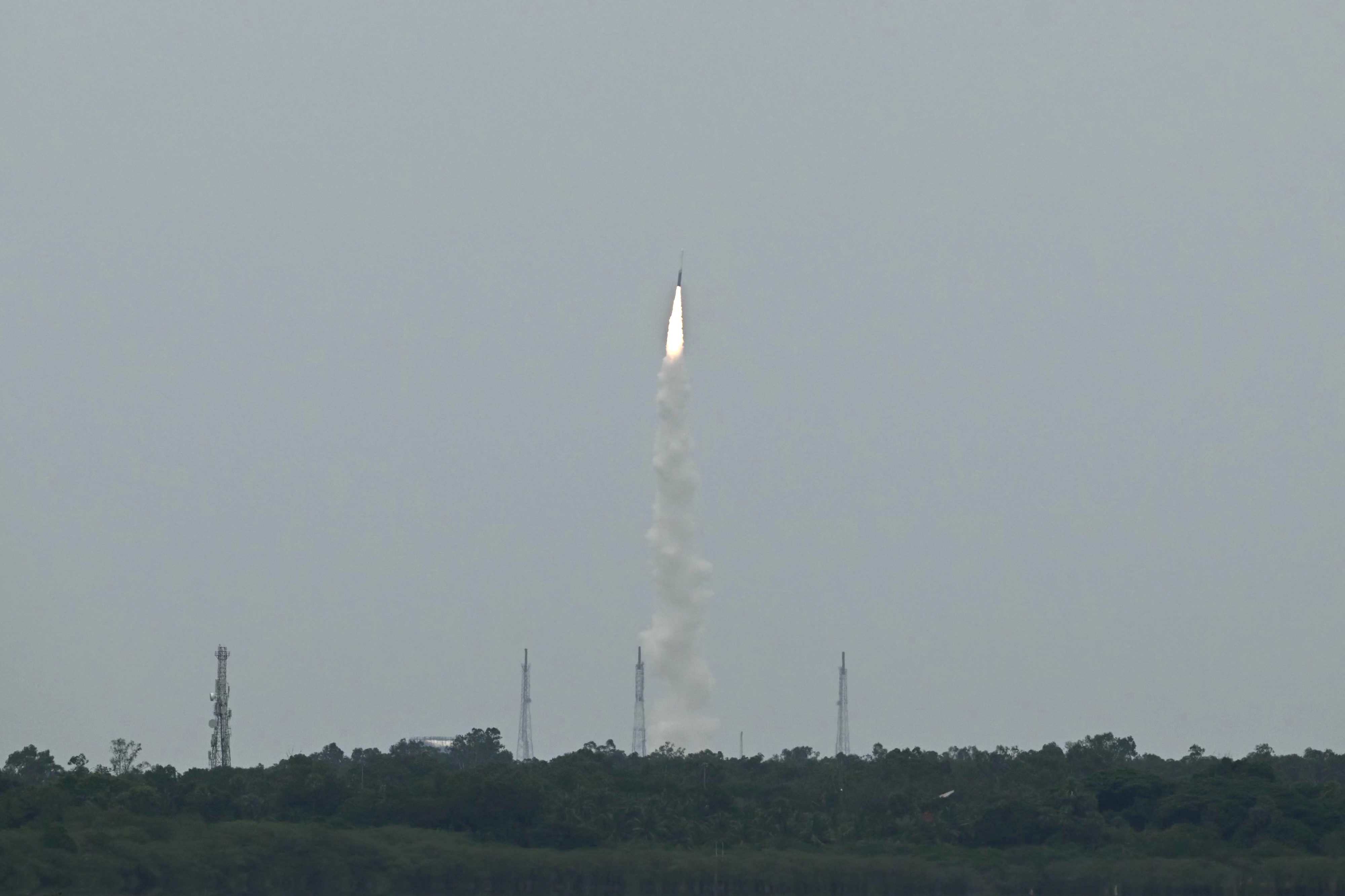
Skyroot Aerospace had set conservative objectives for this maiden flight. The company’s press kit emphasized that the primary goals were a successful liftoff, clearing the launch tower, and gathering extensive data during ascent. Pawan Goenka, chairman of IN-SPACe (Indian National Space Promotion and Authorization Centre), a government body established in 2020 to foster India’s commercial space industry, echoed this sentiment. "The mission objective was only to lift off and clear the tower," Goenka explained. "That was only about 100 meters, but what we went to was 450 kilometers, and it also released all the satellites that were supposed to release. So the mission was absolutely perfect."
A Foundation Built on Collaboration and Innovation
The Indian space agency, ISRO, played a crucial role in enabling Skyroot’s success by providing vital support. In a statement, ISRO confirmed it offered "handholding and support" to Skyroot, granting them access to its specialized facilities for solid rocket motor casting and testing at the Sriharikota spaceport. Furthermore, ISRO authorized Skyroot to utilize one of its two active launch pads, a significant contribution that facilitated the launch’s execution.
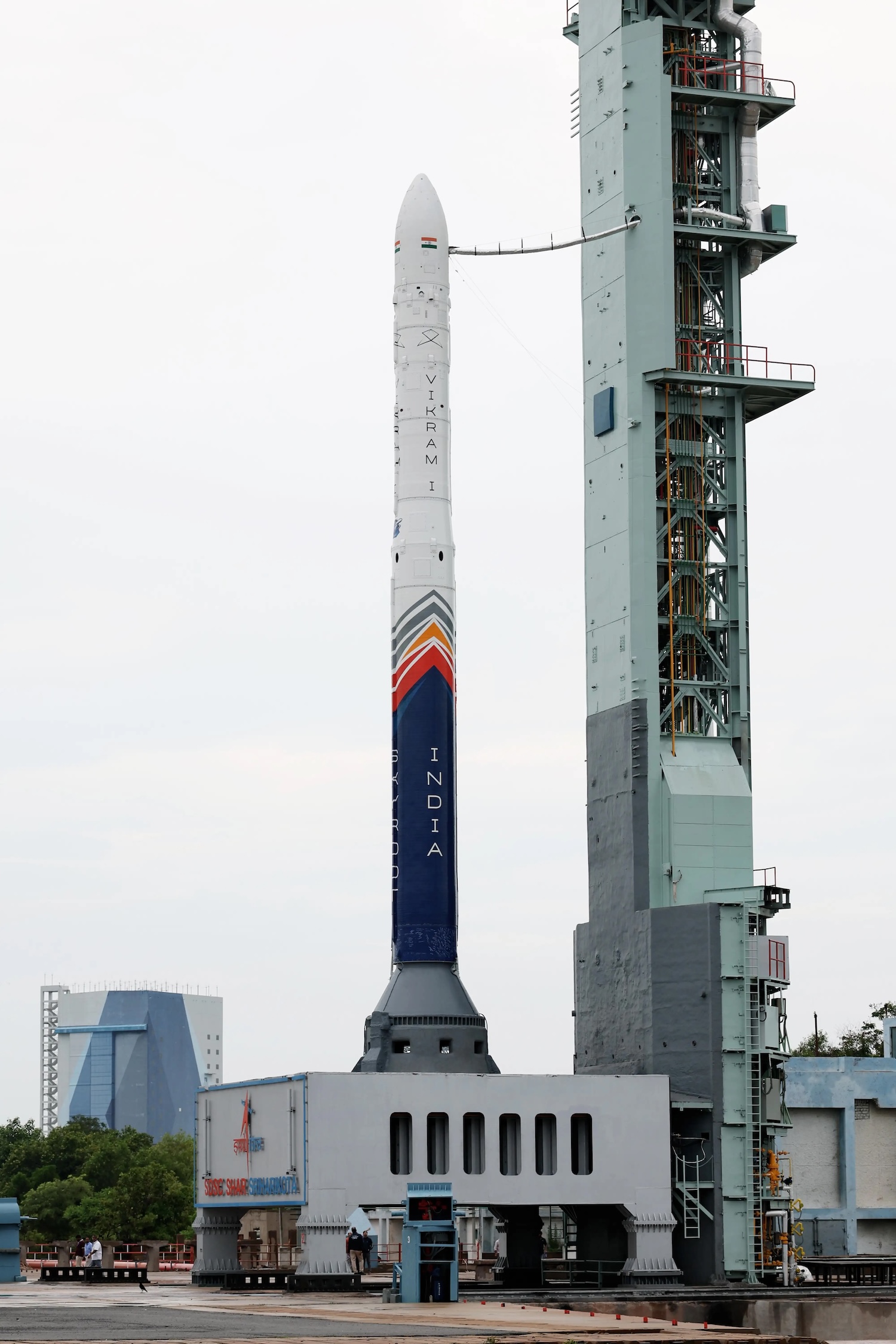
The Vikram-1 rocket, painted in distinctive blue and white livery, is constructed from lightweight carbon composite materials. It is named in honor of Vikram Sarabhai, the visionary Indian physicist widely regarded as the father of India’s space program. This orbital launch vehicle builds upon the foundational knowledge gained from Skyroot’s previous suborbital success. In November 2022, the company successfully launched the Vikram-S rocket, which reached an altitude of nearly 300,000 feet (90 kilometers).
Skyroot’s future roadmap indicates a clear trajectory for growth and capability enhancement. The company plans to introduce the Vikram-1U, featuring additional strap-on solid rocket boosters to accommodate heavier payloads. Looking further ahead, the Vikram-2 is slated to debut a cryogenic upper stage, aiming to significantly increase its payload capacity to 2,000 pounds (900 kilograms) for low-Earth orbit missions. The overarching mission of the Vikram rocket family is to "deliver dedicated and responsive launch services for small satellites," as articulated in Skyroot’s press materials.
However, Skyroot’s ambitions extend far beyond dedicated small satellite launches. In a prior interview with Ars Technica, Chandana outlined his long-term vision for Skyroot, which includes the development of larger, liquid-fueled, and fully reusable rockets capable of achieving a "daily cadence" of launches from multiple international locations. This ambitious goal signifies a desire to compete on a global scale and redefine the paradigm of space access.
Fueling Ambition: Funding, Workforce, and National Vision
Realizing such grand aspirations will undoubtedly require substantial further investment. However, Saturday’s successful launch has unequivocally demonstrated Skyroot’s possession of the essential ingredients for a thriving launch company. This achievement propels Skyroot to a leading position among space startups not only in India but globally, placing it in rarefied air alongside companies in the United States and China. To date, Skyroot has secured approximately $160 million in capital, valuing the company at $1.1 billion. The company has expanded its workforce to over 1,000 employees, with the majority based at its headquarters in Hyderabad. The average age of its workforce is a remarkably young 28, indicative of a dynamic and forward-thinking organization.
Skyroot’s breakthrough launch coincides with a concerted effort by the Indian government, under Prime Minister Narendra Modi, to invigorate the nation’s space industry. India has a long-standing and robust space program, with government-developed rockets like the Polar Satellite Launch Vehicle (PSLV) and the larger LVM3 frequently serving commercial clients from the US and Europe. India has solidified its position as a major spacefaring nation, becoming the fourth country to successfully land a spacecraft on the Moon in 2023 and actively pursuing the development of a human-rated crew capsule for astronaut missions to low-Earth orbit.
Prime Minister Modi has set an ambitious target for the Indian space industry: to increase its annual launch cadence from approximately five launches per year to fifty by the end of the current decade. Following the Vikram-1 launch, Modi personally congratulated Chandana and the Skyroot team. "This is a defining moment in India’s space journey," Modi stated in a press release. "The growing participation of our private sector is opening new frontiers and accelerating innovation. This achievement will encourage countless youngsters to dream bigger and innovate fearlessly."
Chandana, a former engineer at ISRO, co-founded Skyroot in 2018 with Naga Bharath Daka, another ISRO scientist. Their strategic decision to prioritize the development of a solid-fueled launcher was driven by the objective of achieving the lowest development time and cost per launch. "We wanted to get to an orbital launch vehicle in a few years," Chandana had explained. At the time, he acknowledged the inherent risks, stating, "It’s a test launch. Statistically, the first launch from a private company almost always fails. It’s very difficult to succeed with all new systems. But I think we have done everything we can do to ensure the first launch goes well."
The success of the Vikram-1 launch not only exceeded these carefully managed expectations but also paved the way for future endeavors. Chandana indicated that a second Vikram-1 launch could occur before the end of the current year. He proudly proclaimed, "This is a 100 percent designed in India rocket, a 100 percent made in India rocket, built by 100 percent Indian people, for India and for the world. This was a historic moment for India, but also a very proud moment for the global space sector because the world needs more access to space."
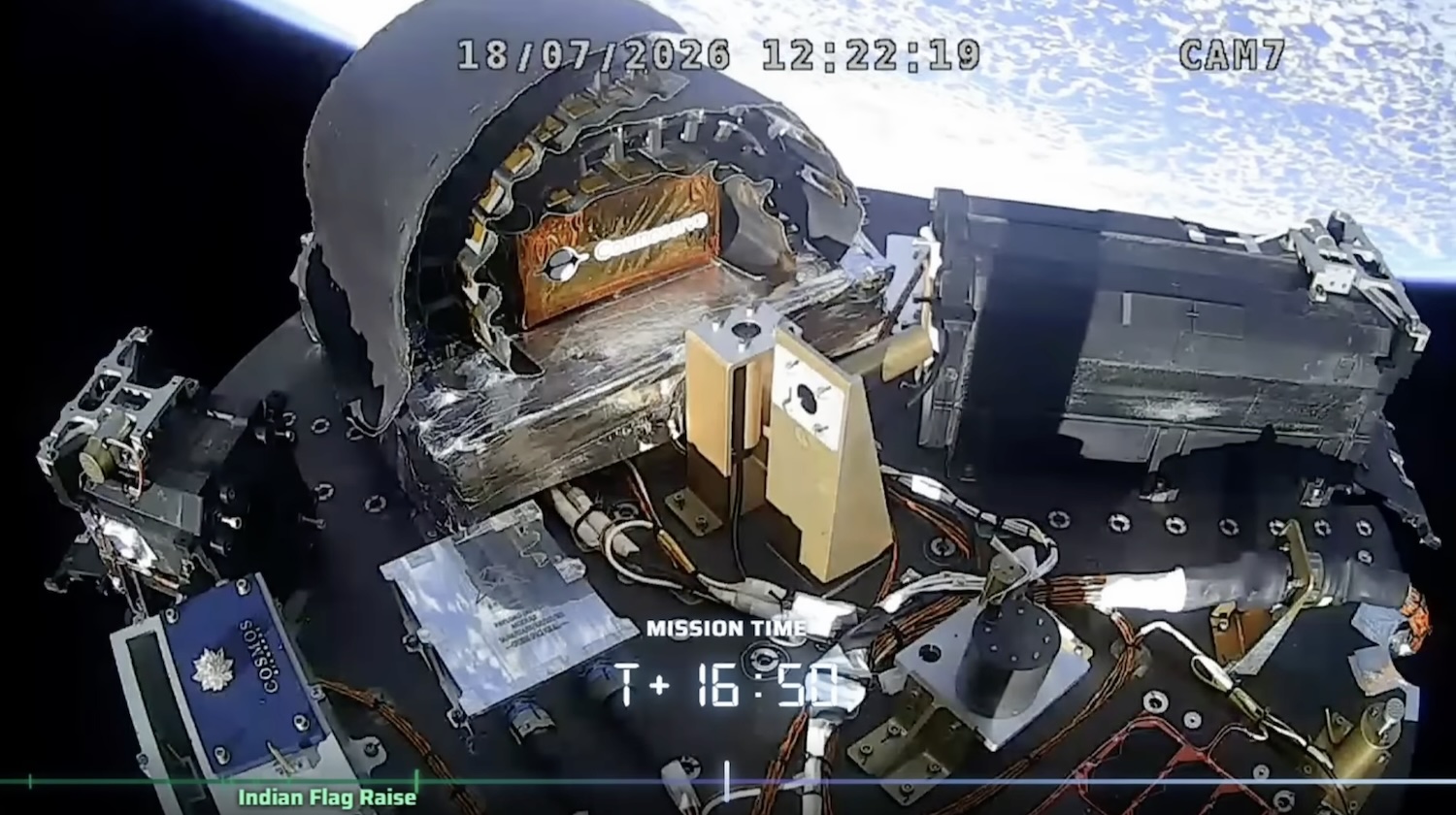
The payload deck of the Vikram-1 rocket’s upper stage, captured in an image moments after orbital insertion, revealed the successful deployment of two small CubeSats. Several other payloads remained attached to the upper stage, showcasing the rocket’s versatility in accommodating various scientific and commercial payloads. This image serves as a visual testament to the mission’s success and the tangible contributions Skyroot is making to the space ecosystem.
The implications of Skyroot’s achievement are far-reaching. It signals a maturation of India’s private space industry, demonstrating its capability to develop and launch sophisticated orbital vehicles. This success is expected to attract further investment, foster greater innovation, and solidify India’s position as a significant player in the global commercial space market. The Vikram-1 launch is not merely a technological feat; it is a powerful statement of intent, propelling India further into the new era of space exploration and utilization.